11th Mar 2024
The team at Pearl Imperial went on a crop tour to Jaipur India organized by NAFED. As per the plan the trip started from Delhi to Jaipur accompanied by two members from NAFED – Mr. Vikas Singh (Delhi Office) and Mr. Parag (Rajasthan Office).
Upon reaching the outskirts of Jaipur, the team visited the town of Bassi. Mr. Vishnu, the Bassi Mandi President, oriented them on how the Mandi Market operates. Mr. Vishnu arranged a live demo of how auctions take place, which is as follows:
Mandi Visit
A farmer arrives at the Mandi early in the morning with the produce and informs the agent (appointed by the mandi) of the quantity and quality of produce he has brought. One or two bags of the produce as a sample are turned over on the ground and the agent starts auctioning as per the price informed by the farmer. Once bidding is done and the price is confirmed to the highest bidder, the farmer still has full authority to reject the price until he delivers the cargo.
As majority of the farmers live in remote areas, they are paid by cash to buy essential foods they need before returning to their villages or else they take diesel as another form of payment. It all depends on the relationship between the buyer and the farmer.
For your information:
Farm Visit
The team next headed on a farm visit in Bassi that mainly grows green peas, chickpeas, tomatoes, onions and leafy greens over 23 hectares (56 acres). As per the government, this is considered a large farmland as it is 10 hectares and above. The farm grows the following crops:
- 55% - Green Whole Peas (The most lucrative crop)
- 15% - Desi Chickpeas
- 20% - Wheat
- 5-6% - Tomatoes
- 4-5% - Onions and leafy greens
Members were briefed on crop irrigation, crop rotation and turnaround time for harvesting each crop.
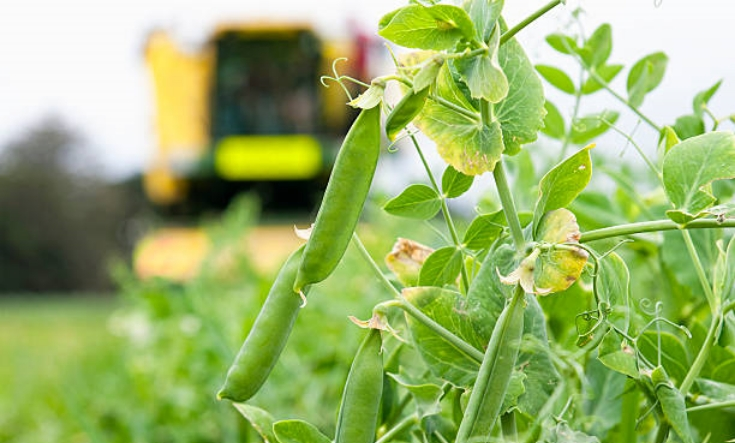
Green Peas – Once seeded, green peas give three crop yields throughout the year. After the third crop yield, the plants are removed and sold for animal feed and are totally wiped out. The land is left barren so that the soil can absorb natural moisture. It is then irrigated to either cultivate the same crop or grow along with peanuts, guar and wheat.
As green peas farms give rise to several pods of peas that can be eaten raw, a lot of these fresh green peas go to the freezing industry, where the drying process is done. Interestingly the frozen green peas business is increasing tremendously due to the preservation of nutrients through this process.
Desi Chickpeas – The seeding is done after the rains. As it is a rabi crop it is harvested within two –three months. After the harvest is done, peanuts will be planted in the soil.
Tomatoes – Though the weather conditions aren't ideal in Rajasthan for growing tomatoes, a new Israeli-adopted drip irrigation system is successfully helping the growth of this crop.
In summary, the crop tour to Jaipur was informative and interesting where our team learnt about the irrigation system, crop rotation and turnaround time for harvesting. We profusely thank NAFED for organizing the trip and we look forward to the upcoming ones.